Leak Detection in SoHo & Tribeca, Manhattan
Uncovering concealed plumbing failures without needless demolition. From vintage cast-iron lofts along Broadway to cobblestone converted warehouses in Tribeca, our systematic acoustic and thermal diagnostics isolate active water intrusion at the source.
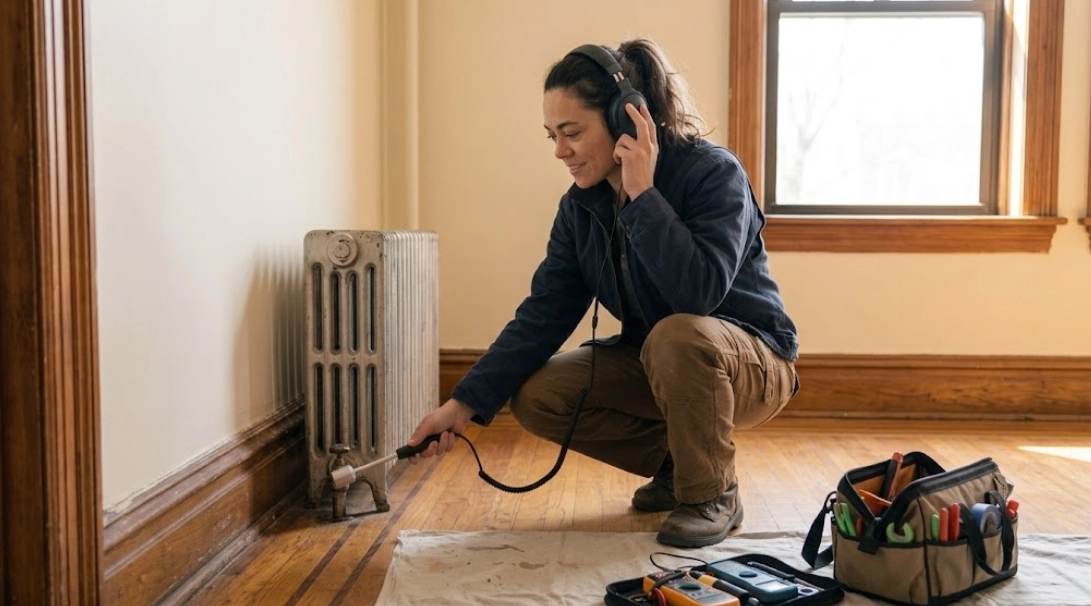
Targeted Diagnostic Leak Detection in Lower Manhattan
Safeguarding historic architecture, luxury lofts, and multi-unit residential buildings against water intrusion.
Water intrusion represents one of the most frustrating, destructive, and legally complex challenges facing property owners, cooperative shareholders, and condominium residents in Lower Manhattan. When you need dependable leak detection SoHo and Tribeca Manhattan, discovering the exact origin of moisture is essential before extensive tearing into custom plaster, exposed brickwork, or imported millwork occurs.
In dense neighborhoods like SoHo, Tribeca, and Little Italy, residential buildings frequently combine 19th-century cast-iron framing with modern high-end architectural renovations. Hidden supply risers, concealed waste lines, hydronic heating loops, and air conditioning condensate drains run through shared structural shafts. A pressurized pinhole leak in a copper branch line or a cracked cast-iron waste hub can release gallons of moisture behind finished walls before visible staining ever appears on a ceiling below.
Effective apartment leak detection SoHo and Tribeca Manhattan demands an understanding of structural water migration. Water rarely travels in a straight line; moisture follows floor joists, conduits, and structural beams, often dripping dozens of feet away from the actual pipe breach. Professional diagnostic assessment isolates the source systematically, distinguishing between active pressurized plumbing, gravity drainage, heating loops, and exterior masonry seepage.
Warning-Sign Checklist for Property Owners
Notice any of these subtle symptoms in your residence or commercial space?
- Bubbling, discoloration, or peeling paint on ceilings and walls
- Cupping, crowning, or dark stains on hardwood plank flooring
- Hissing or dripping sounds inside wall cavities with faucets closed
- Unexplained dampness or persistent mildew odors around risers
- Subtle drops in domestic fixture water pressure
- Unanticipated moisture in lower-floor tenant spaces or basements
Apartment-to-Apartment Leaks & Shared Building Risers
Navigating the intricate plumbing networks and jurisdictional boundaries of Manhattan co-ops and condos.
Tracing Water Migration Between Floors
A sudden water leak from upstairs apartment SoHo and Tribeca Manhattan scenario is among the most common calls in multi-family dwellings. When water emerges through crown moldings or bathroom ceilings, the immediate assumption is an overflowing fixture directly overhead. However, water often originates two or three floors higher, entering a vertical pipe chase and traveling horizontally along concrete slabs or subflooring before finding an escape route.
Specialized hidden water leak detection SoHo and Tribeca Manhattan uses non-invasive thermal imaging and calibrated moisture mapping to track temperature differentials and relative moisture levels, reconstructing the path of travel back to the compromised fitting or fixture seal.
Building Management & Access Coordination
Resolving vertical leaks in Manhattan buildings requires coordination between private unit owners, building superintendents, and managing agents. Determining whether a failure is a unit-owner responsibility (such as an appliance hookup, tub waste-and-overflow, or supply valve) or a building corporation responsibility (such as a vertical main cold/hot riser or sanitary stack) requires objective diagnostic proof.
Our diagnostic reporting provides clear, documented findings so that building management and insurance adjusters can quickly evaluate repair scopes and coordinate access without prolonged tenant disputes.
The Professional Leak Detection Process
A methodical, non-invasive approach designed to protect historic finishes and expensive millwork.
Acoustic Sensor Triangulation
Pressurized water escaping through tiny pinholes in copper or brass pipes generates distinct sound frequencies. Sensitive ground microphones and acoustic listening discs amplify these vibrations through solid walls, wood flooring, and tile surfaces, narrowing down the leak zone to within inches.
Infrared Thermal Imaging
Moisture evaporates and cools structural materials, creating thermal signatures invisible to the naked eye. Infrared cameras scan drywall, ceilings, and subfloors to map hidden moisture blooms and identify the coldest, densest core of the intrusion without punching exploratory holes.
Isolation Pressure Testing
By isolating hot water, cold water, heating loops, and fixture branches with digital pressure test gauges, technicians verify whether a pressure drop occurs on an isolated line. This definitively confirms or rules out pressurized supply plumbing before evaluating gravity drains.
Honest Non-Invasive Realities
While non-invasive electronic and thermal equipment allows technicians to locate the general area of moisture without unnecessary demolition, property owners must understand that physical verification and piping repairs ultimately require targeted access. Once the source is isolated, a small, surgical inspection opening is created directly over the defect—preventing the widespread, disruptive demolition of entire rooms.
Common Concealed Leak Locations in Manhattan Homes
Where water intrusion commonly strikes in loft apartments and historic brownstones.
Concealed Walls and Structural Chases
When a property owner requests leak in wall detection SoHo and Tribeca Manhattan, the issue frequently centers on older galvanized pipe nipples or solder joints in vertical riser shafts. Electrolytic corrosion between dissimilar metals and seasonal thermal expansion causes joints to weep slowly inside enclosed drywall pockets.
Over time, this moisture degrades structural framing and insulation, feeding mold spores before breaking through surface finishes. Timely acoustic scanning prevents progressive structural decay.
Ceilings, Bath Tubs & Shower Pans
Need fast ceiling leak repair SoHo and Tribeca Manhattan? Ceilings are the primary receiving surface for overhead bathroom leaks. Between failed shower pan membranes, deteriorating tile grout, worn tub waste-and-overflow gaskets, and leaking radiator valves, overhead water can silently rot lath-and-plaster ceilings until heavy plaster collapses.
We inspect both supply and drainage circuits to determine whether the fault stems from active plumbing, fixture usage, or waterproofing failures.
Related Plumbing & Heating Services
Resolving the underlying piping, drainage, heating, and code requirements connected to water intrusion.
Pipe Leak Repair
Once a leak is located, localized pipe repairs replace damaged sections of copper, brass, or galvanized piping using code-approved fittings. We handle pinholes, cracked joints, and burst lines with minimal disruption. Learn more about our dedicated pipe leak repair in SoHo and Tribeca.
Explore Pipe Leak Repair →Repiping Services
When older galvanized or aging copper lines suffer from recurrent pinholes and internal corrosion, full or partial riser repiping provides a permanent remedy. We replace deteriorated distribution networks to restore reliable water volume and clean water flow. Review our comprehensive repiping in SoHo and Tribeca.
Explore Repiping Options →Water Heater Repair
Leaking storage tanks, dripping pressure-relief valves, or complete hot water outages demand prompt mechanical intervention. We troubleshoot gas, electric, and indirect water heating systems across residential buildings. Discover more on our water heater repair in SoHo and Tribeca.
Explore Water Heater Repair →Boiler Repair
Steam and hydronic heating systems can develop critical boiler leaks, faulty relief valves, or circulator failures that shut down winter heat. Our technicians diagnose burner controls, low-water cutoffs, and distribution loops. See details on our boiler repair in SoHo and Tribeca.
Explore Boiler Repair →Gas Line Repair & Inspection
Gas piping defects, appliance hookups, and NYC Local Law 152 compliance require licensed master plumber oversight and calibrated pressure testing. We deliver safe fuel gas diagnostics and DOB-compliant testing. Visit our gas line repair & inspection page.
Explore Gas Line Services →Drain Cleaning
Recurring blockages and slow waste lines can cause pressure buildup and joint leakage along older cast-iron branch piping. We clear stubborn stoppages, kitchen grease, and scale with motorized snaking and camera inspections. Learn about drain cleaning in SoHo and Tribeca.
Explore Drain Cleaning →Backflow Testing
NYC Department of Environmental Protection mandates annual certification for commercial and multi-family backflow containment devices to protect drinking water. We inspect, test, rebuild, and file official documentation. Check out our backflow testing services.
Explore Backflow Testing →Serving Historic Neighborhoods Across Lower Manhattan
Tailored leak diagnostics for cast-iron lofts, brick tenements, and luxury mid-rises.
Whether responding to urgent calls for leak detection near SoHo, troubleshooting complex riser weeping with leak detection near Tribeca, or isolating bathroom water damage for residents seeking leak detection near Little Italy, our team brings localized technical insight to every assignment.
From the vibrant retail and residential lofts along Broadway in SoHo and Canal Street to the historic brick residential buildings bordering City Hall Park and Civic Center, we respect the architectural integrity of Lower Manhattan properties. Our service reach also extends to adjacent communities including Hudson Square, Greenwich Village, Chinatown, and the Financial District.
Local Coverage Overview
- SoHo: Cast-iron architecture, historic timber beams, and loft piping conversions
- Tribeca: Industrial warehouse conversions, luxury condominium floor slabs, and high-pressure risers
- Little Italy & Civic Center: Pre-war multi-unit buildings with shared waste and steam stacks
- Hudson Square: Commercial-to-residential retrofits with complex mechanical chases
Frequently Asked Questions About Leak Detection
Clear, objective answers regarding leak diagnostics, apartment protocols, and pipe access.
What are the common signs of a hidden water leak in an apartment?
Common warning signs include unexplained water staining or peeling paint on ceilings and drywall, warm spots on hardwood or tile flooring, the faint sound of running water when all fixtures are turned off, persistent musty odors, mold or mildew along baseboards, and sudden drops in water pressure across bathroom and kitchen fixtures.
Can a hidden pipe leak always be located without opening walls or ceilings?
Non-invasive diagnostic tools—including high-resolution thermal imaging cameras, acoustic listening discs, electronic moisture meters, and pipe pressure tests—can pinpoint the origin of moisture without invasive demolition in many cases. However, final verification and physical pipe repair often require targeted exploratory openings once the exact location has been isolated.
What should I do immediately if water is actively leaking through my ceiling?
Place buckets or containers beneath the dripping area and protect valuable furniture or electronics. If the ceiling drywall is sagging under water weight, carefully make a small relief hole in the center with a screwdriver to prevent a catastrophic ceiling collapse. Immediately notify your upstairs neighbor and building superintendent or managing agent, then contact a professional plumber to trace the supply or waste riser.
Who is responsible for plumbing leaks between apartments in a Manhattan co-op or condo?
Responsibility is governed by the building's proprietary lease or condominium bylaws. Typically, vertical main building risers and shared drain stacks inside walls are the responsibility of the building corporation, while branch piping, fixture shut-off valves, appliances, and tub traps serving a single private unit fall under that individual apartment owner's responsibility.